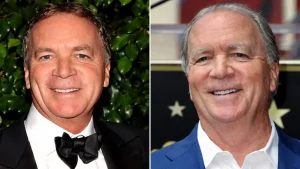
David Lawler and Bruce Broussard have professional backgrounds that reflect different paths to executive leadership in American business. Lawler is associated with the energy industry, including oil and natural gas operations, while Broussard is known for his experience in healthcare management, health insurance, and corporate leadership.
When researching these two executives, it is important to distinguish their individual accomplishments from any possible professional connection between them. Although their names may appear together in online searches, that alone does not establish that they are relatives, business partners, or former colleagues.
Their careers nevertheless offer an interesting David Lawler and Bruce Broussard perspective on how leadership develops across industries. From managing energy operations to overseeing healthcare organizations, senior executives must balance financial performance, operational efficiency, long-term planning, and changing market conditions.
Understanding their professional histories provides useful context for readers interested in business leadership, executive career development, and the responsibilities associated with leading major organizations.
Who Is David Lawler?
David C. Lawler is an energy executive whose career has included engineering, oil and natural gas production, and senior management positions. His professional background illustrates how technical knowledge can contribute to leadership in an industry that depends on complex infrastructure, substantial investment, and careful operational planning.
Professional Background and Career Development
Lawler developed experience in the energy sector through engineering and operational roles before advancing into executive management. His career included positions at Shell, PostRock Energy, and SandRidge Energy.
In 2014, he joined BP’s onshore energy business, bpx energy, as chief executive officer. He later became chairman and president of BP America in 2020, taking on responsibilities that extended beyond day-to-day operations.
These positions required an understanding of production activities, business strategy, organizational performance, and the financial considerations involved in managing large energy operations.
Leadership in the Energy Sector
The energy industry presents distinctive challenges for corporate leaders. Companies must make investment decisions that can affect operations for years, while also responding to changing commodity prices, environmental requirements, technological developments, and global energy demand.
Lawler’s experience in upstream operations is relevant to these challenges. Upstream energy activities include exploring for resources, developing oil and gas fields, drilling wells, and producing hydrocarbons.
Effective leadership in this environment requires coordination among engineers, financial professionals, field workers, contractors, and regulatory specialists. Decisions about production, maintenance, safety, and investment can influence both short-term performance and long-term business sustainability.
An executive with operational experience may be better positioned to understand the practical implications of these decisions. However, successful leadership also depends on financial discipline, communication, risk management, and the ability to adapt when market conditions change.
Work in Natural Gas and LNG
Lawler’s professional experience also extends to the natural gas industry. His later career has been associated with Caturus, a company focused on natural gas and liquefied natural gas, commonly known as LNG.
LNG is produced by cooling natural gas until it becomes liquid, making it easier to store and transport over long distances. The industry plays an important role in connecting natural gas producers with international markets.
Managing businesses in this sector involves considering production capacity, processing infrastructure, export facilities, financing, supply agreements, and customer demand. Projects may require years of planning and significant capital commitments before they begin generating returns.
Lawler’s background in energy operations provides relevant context for understanding this work. His career demonstrates how experience in engineering and production can support a transition into broader strategic leadership.
Who Is Bruce Broussard?
Bruce Broussard is an American business executive with extensive experience in healthcare, financial management, and corporate governance. He is particularly recognized for his leadership at Humana, where he served as chief executive officer for more than a decade.
His career provides an example of how financial expertise and operational experience can support leadership in complex, highly regulated industries.
Education and Early Career
Broussard earned a bachelor’s degree in business administration, specializing in accounting and finance, from Texas A&M University. He later completed an MBA in finance at the University of Houston.
His educational background established a foundation in financial planning, business analysis, and organizational management.
Before joining Humana, Broussard spent approximately 11 years at US Oncology, holding several senior positions, including chief financial officer, chief executive officer, and chairman. Following McKesson’s acquisition of US Oncology, he became president of McKesson’s specialty pharmacy division.
These responsibilities provided experience in financial oversight, healthcare operations, and managing organizations through significant business changes.
Leadership at Humana
Broussard joined Humana in 2011 and became CEO in 2013. He held the position until July 2024, when Jim Rechtin succeeded him as part of a planned leadership transition.
During his tenure, Humana expanded its focus beyond health insurance toward a more integrated healthcare services model. The company increased its emphasis on coordinating insurance coverage with care delivery, particularly for older adults.
This approach reflects a broader development in the American healthcare system. Insurers have increasingly explored ways to connect coverage, primary care, home health services, and other forms of medical support.
Such strategies can involve substantial operational challenges. Healthcare executives must consider patient needs, provider relationships, government reimbursement policies, medical costs, and regulatory requirements.
Broussard’s leadership experience at Humana therefore offers useful insight into the responsibilities involved in managing a large healthcare organization while responding to changes in the industry.
Bruce Broussard’s Role at HP
In February 2026, HP Inc. appointed Broussard interim chief executive officer following Enrique Lores’s departure. Broussard had served on HP’s board of directors since 2021, giving him prior experience with the company’s governance and strategic priorities.
His appointment represented a transition from healthcare leadership to the technology sector.
Although the industries differ, both require executives to oversee financial performance, manage operational risks, allocate resources, and make decisions that support long-term business objectives.
At HP, the responsibilities associated with interim leadership include maintaining strategic direction and supporting business operations while the board considers the company’s longer-term leadership arrangements.
His appointment also illustrates how senior executives may apply experience gained in one sector to a different corporate environment. However, the effectiveness of that experience depends on understanding the new organization’s customers, competitive position, technology, and operating model.
David Lawler and Bruce Broussard: Key Differences in Leadership
The careers of Lawler and Broussard demonstrate that there is no single route to senior executive leadership.
Lawler developed his career through technical and operational experience in the energy sector. Broussard advanced through financial management and healthcare leadership before taking on a technology-company leadership role.
Their professional backgrounds highlight several important differences.
Technical Expertise Versus Financial Management
Lawler’s engineering background is relevant to the operational demands of oil and natural gas production. Energy executives must understand technical risks, infrastructure requirements, production efficiency, and capital-intensive projects.
Broussard’s training in accounting and finance provided a different starting point. His career involved financial oversight, healthcare operations, corporate planning, and organizational transformation.
Neither background is inherently superior. The skills required for effective leadership depend on the organization’s needs and the responsibilities of the executive position.
Industry-Specific Decision-Making
Energy companies must often make decisions involving long development timelines, changing commodity prices, and substantial physical infrastructure.
Healthcare organizations face different pressures, including medical costs, patient outcomes, insurance regulations, and reimbursement arrangements. Technology companies must manage product development, innovation, competition, and changing customer expectations.
Lawler’s and Broussard’s careers demonstrate why understanding an industry’s specific operating environment is essential for executive decision-making.
Managing Change and Organizational Priorities
Senior executives are frequently responsible for guiding organizations through periods of transition. These changes may involve acquisitions, new business strategies, infrastructure development, digital transformation, or leadership succession.
Lawler’s experience includes leadership within energy businesses and the development of natural gas and LNG operations. Broussard’s experience includes changes in Humana’s healthcare business model and his subsequent appointment to lead HP on an interim basis.
Both career paths illustrate the importance of strategic planning, communication, accountability, and adapting to changing business conditions.
Are David Lawler and Bruce Broussard Connected?
There is no established public evidence identifying David Lawler and Bruce Broussard as relatives, business partners, or former colleagues.
Their documented professional histories center on different industries and organizations. Lawler’s career has primarily involved energy production and natural gas, while Broussard’s experience has focused on healthcare, finance, and technology leadership.
It is important not to confuse a shared search query with evidence of a direct connection. People may search for two executives together because they are comparing their careers, researching corporate leadership, or trying to establish whether a professional relationship exists.
A reliable assessment should distinguish confirmed facts from speculation. Any claim about a family relationship, shared business venture, or professional collaboration should be supported by credible documentation.
The absence of a publicly documented connection does not prove that the two executives have never met. It simply means that a specific relationship should not be presented as fact without supporting evidence.
Why Their Careers Matter to Business Readers
Examining the professional histories of David Lawler and Bruce Broussard can help readers understand how leadership develops in different industries.
Their careers offer several broader lessons for aspiring executives, business students, and professionals considering advancement.
Industry knowledge matters. Leaders need to understand the technical, financial, and operational realities of the organizations they manage.
Career paths can differ significantly. Engineering, accounting, finance, and operational management can all provide foundations for executive leadership.
Experience must adapt to new challenges. Skills developed in one organization may be valuable elsewhere, but leaders must also learn the specific demands of a new industry.
Leadership involves competing priorities. Executives must balance financial results, operational performance, stakeholder expectations, and long-term business objectives.
Accurate research is essential. Understanding an executive’s actual responsibilities and career history is more useful than relying on assumptions about reputation or professional connections.
These lessons apply beyond energy, healthcare, and technology. They are relevant to organizations of different sizes, from growing businesses to established multinational corporations.
Frequently Asked Questions
1. Who are David Lawler and Bruce Broussard?
David Lawler is an energy executive associated with BP America, bpx energy, and Caturus. Bruce Broussard is a business executive known for his former leadership at Humana and his appointment as interim CEO of HP Inc. in 2026.
2. Are David Lawler and Bruce Broussard related?
No publicly established evidence reviewed for this article confirms a family relationship between them. Their professional backgrounds are distinct.
3. Have David Lawler and Bruce Broussard worked together?
Their publicly documented career histories do not establish a direct professional collaboration. Their careers have primarily developed in different industries.
4. What is David Lawler known for?
Lawler is known for his leadership in oil and natural gas operations, including serving as CEO of bpx energy and chairman and president of BP America. His career has also included leadership in natural gas and LNG.
5. What is Bruce Broussard known for?
Broussard is best known for leading Humana from 2013 to 2024. He also held senior positions at US Oncology and McKesson before becoming interim CEO of HP Inc. in February 2026.
6. What industries have they worked in?
Lawler’s primary industry is energy, including oil, natural gas, and LNG. Broussard’s experience includes healthcare, health insurance, specialty pharmacy, finance, and technology leadership.
7. What leadership qualities do their careers illustrate?
Their careers highlight the value of industry expertise, financial awareness, strategic planning, operational management, and the ability to guide organizations through change.
8. Why might people compare these two executives?
Readers may be researching executive biographies, comparing career paths, exploring leadership strategies, or checking whether the individuals have a documented professional connection.
9. Did Bruce Broussard leave Humana?
Yes. Broussard stepped down as Humana’s CEO in July 2024 as part of a planned succession process. Jim Rechtin succeeded him.
10. What is the best way to research their professional histories?
Review official company biographies, corporate announcements, executive appointment records, and reputable business reporting. For current positions, prioritize recent information because leadership roles can change.
Conclusion
David Lawler and Bruce Broussard represent two different approaches to executive career development. Lawler’s background in engineering and energy operations has shaped his leadership in the oil, natural gas, and LNG sectors. Broussard’s experience in finance and healthcare management has supported his leadership at Humana and his subsequent move into technology leadership at HP.
Their careers demonstrate that executive success requires a combination of professional expertise, strategic thinking, financial discipline, and the ability to manage organizational change. They also illustrate how leadership responsibilities vary according to the industry and business environment.
For anyone researching David Lawler and Bruce Broussard, understanding their individual career histories provides a clearer picture than assuming a connection based on their names appearing together. A careful, evidence-based approach helps readers distinguish documented achievements from unverified claims and gain a more meaningful understanding of both executives.