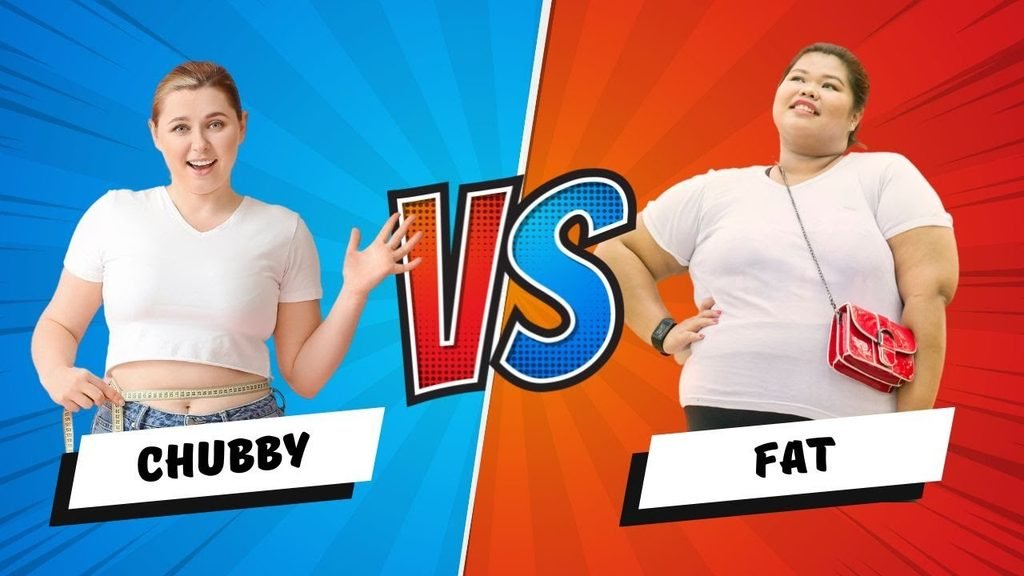
When people search for chubby vs fat, they are often trying to understand whether the two words describe different body sizes, whether one is more appropriate than the other, or how these terms are understood in everyday American English. The answer is more nuanced than a simple size comparison.
“Chubby” and “fat” are informal words used to describe body size or appearance, but they do not have precise medical definitions. Their meaning can depend on context, tone, culture, age, and the person using the word. In health-related discussions, terms such as body mass index (BMI), overweight, obesity, waist circumference, and body composition are generally more specific.
Understanding the difference can help people communicate more accurately while avoiding assumptions about someone’s health based solely on appearance.
What Does “Chubby” Mean?
“Chubby” generally describes someone whose body appears somewhat rounded, soft, or fuller than what is considered average in a particular social context.
The word is often associated with a moderately fuller body shape rather than an extremely large body size. However, there is no universal measurement that determines when someone is officially “chubby.”
For example, someone might describe a person as chubby because they have fuller cheeks, a rounder stomach, or thicker arms and legs. Another person might use the same word for a noticeably larger body.
This makes “chubby” subjective rather than scientific.
The term can also have different connotations depending on the situation. It may be used casually or affectionately, but some people may find it uncomfortable or insulting when it is applied to them without permission.
What Does “Fat” Mean?
“Fat” can refer to body fat itself, but it is also commonly used as an adjective describing a person’s body size.
From a biological perspective, body fat is essential tissue. The body needs fat for energy storage, hormone production, insulation, and protection of organs.
In everyday language, however, “Chubby vs Fat” is often used to describe someone perceived as having a larger body. Unlike a medical measurement, the everyday use of the word does not tell you a person’s exact body-fat percentage, health status, fitness level, or medical condition.
It is also worth recognizing that “fat” has historically been used as an insult. Some people now use the word neutrally as a body-size descriptor, while others strongly dislike being described that way.
Chubby vs Fat: Is There a Real Difference?
The simplest distinction is that “chubby” usually suggests a somewhat fuller or rounded body, while “fat” is commonly understood as a broader description of a larger body size.
But there is no official boundary between the two.
| Term | Common everyday meaning | Medical definition? |
|---|---|---|
| Chubby | Somewhat rounded or fuller body | No |
| Fat | Larger amount of body fat or larger body size | No, as an everyday label |
| Overweight | Body weight above a reference range, often based on BMI | Yes, in specific clinical contexts |
| Obesity | A medical classification involving excess adiposity and health considerations | Yes, although diagnosis requires context |
These distinctions matter because everyday descriptions and medical classifications are not interchangeable.
A person can look “chubby” without meeting a clinical definition of overweight. Similarly, someone can have a body that others describe as “fat” without that description telling us anything reliable about their overall health.
Chubby vs Overweight: Are They the Same?
No. “Chubby” and “overweight” are not exact synonyms.
Overweight is a health-related classification commonly associated with BMI. For adults, a BMI from 25.0 to 29.9 is traditionally categorized as overweight. BMI is calculated from height and weight, but it does not directly measure body fat.
“Chubby,” on the other hand, is an informal appearance-based description.
This distinction becomes particularly important when discussing health. A casual visual description cannot replace an assessment based on relevant health information.
Why BMI Does Not Tell the Whole Story
BMI can be useful as a population-level screening measure, but it has limitations when applied to individuals. It does not distinguish between fat mass and lean mass, for example.
Someone with substantial muscle mass could have a relatively high BMI without having excess body fat.
Other factors can matter when evaluating health, including waist circumference, blood pressure, blood glucose, cholesterol, medical history, physical activity, and overall body composition.
For that reason, simply looking at someone and deciding whether they are “chubby” or “fat” is not a reliable way to determine their health.
Does Being Chubby Mean Being Unhealthy?
Not necessarily.
Body size and health are related in complex ways, and appearance alone cannot establish an individual’s health status.
A person’s health can involve many factors, including nutrition, physical activity, sleep, genetics, age, medications, medical conditions, stress, and access to healthcare.
It is therefore misleading to assume that a person who looks chubby must be unhealthy or that someone who appears thin must be healthy.
Health assessments require more information than body shape alone.
Why Do People Use “Chubby” Instead of “Fat”?
People may choose “chubby” because they perceive it as softer or less direct than “fat.” In some contexts, it can sound more affectionate or less judgmental.
For example, parents may sometimes describe a young child as chubby because of naturally rounded features. Friends or romantic partners may also use the word in a familiar context.
However, intention and impact are not always the same.
A person may intend “chubby” as a compliment while the person hearing it may feel self-conscious or judged. This is one reason it is generally better to consider someone’s preferences when discussing their body.
Is “Fat” Always an Insult?
No. The meaning of “fat” depends heavily on context.
In some body-acceptance and fat-activism communities, people intentionally use “fat” as a neutral descriptor rather than treating it as an insult. The word can also appear in educational discussions about body image, discrimination, and representation.
At the same time, “fat” has frequently been used in bullying and weight-based discrimination. As a result, some people associate it strongly with negative judgment.
There is no universal rule that everyone feels the same way about the word.
When talking about a specific person, using the terminology they prefer is usually the most considerate approach.
How Should You Describe Body Size Respectfully?
When body size is relevant to a conversation, precise and neutral language can make communication clearer.
Depending on the context, alternatives might include:
- Larger-bodied
- Higher-weight
- Plus-size
- Body size
- Body weight
- Body composition
- Overweight, when discussing the appropriate clinical context
The best term depends on what you are actually trying to communicate.
For example, if discussing clothing, “plus-size” may be more relevant than a medical term. If discussing a health assessment, clinical terminology may be more appropriate.
If body size is not relevant to the subject, there may be no reason to mention it at all.
Chubby vs Fat in Children
The distinction can become especially important when talking about children.
Children naturally change shape as they grow, and body proportions can vary substantially during different developmental stages. Describing a child as “fat” or repeatedly focusing on their body size can affect how they think about food and their own appearance.
Parents and caregivers who have concerns about a child’s growth should discuss them with a pediatric healthcare professional rather than relying on appearance-based labels.
Growth charts, developmental history, nutrition, activity, and other health factors provide much more useful information than a casual description such as “chubby.”
Does “Chubby” Mean a Specific Body-Fat Percentage?
No.
There is no medically recognized body-fat percentage that automatically makes someone “chubby.”
Body-fat percentage can be estimated using various methods, but those methods have different levels of accuracy. Even when a measurement is available, the interpretation can depend on factors such as age and sex.
The word “chubby” remains an informal description rather than a standardized body-composition category.
What About “Fat,” “Overweight,” and “Obese”?
These terms should not be treated as interchangeable.
Fat is commonly used as an everyday body-size descriptor.
Overweight can be a clinical or statistical classification, particularly when BMI is used.
Obesity is a medical term associated with excess adiposity and increased risk for certain health conditions. Modern clinical assessment increasingly recognizes that BMI alone does not capture every aspect of an individual’s health.
Because these words have different meanings, replacing one with another can create confusion.
For example, saying that someone “looks fat” does not establish that they meet a clinical definition of obesity.
Why Appearance Is an Unreliable Measure of Health
Two people with similar body shapes can have very different health profiles.
One person might exercise regularly and have favorable cardiovascular markers, while another person with a similar appearance could have a health condition requiring medical attention. Conversely, a person who appears thin can still have poor nutrition, low fitness, or a medical condition.
This is why healthcare professionals use measurements, medical history, laboratory results, physical examinations, and other information when evaluating health.
Appearance can describe what someone looks like. It cannot provide a complete health assessment.
How Social Context Changes the Meaning of “Chubby”
Words about body size are influenced by culture and social expectations.
A body described as “chubby” in one community might be considered average in another. Standards around body size can also change over time because of fashion, media, cultural preferences, and social attitudes.
The same person may therefore receive different descriptions depending on who is speaking.
This subjectivity is one of the main reasons body-size terminology should be interpreted carefully.
Frequently Asked Questions About Chubby vs Fat
Is chubby smaller than fat?
In everyday usage, “chubby” often suggests a somewhat fuller or rounded body, while “fat” can refer to a larger body size more generally. However, there is no objective boundary separating the terms.
Is chubby a polite word for fat?
Some people use “chubby” as a softer alternative to “fat,” but not everyone considers it polite. The preferred terminology varies from person to person.
Does chubby mean overweight?
Not necessarily. “Chubby” is an informal description, while “overweight” can refer to a specific health classification based on measures such as BMI.
Can a person be fat and healthy?
Body size alone does not determine a person’s complete health status. Health involves multiple factors and should not be judged solely from appearance.
Is fat a medical term?
“Fat” can refer biologically to adipose tissue, but using “fat” as a description of someone’s body is generally not a precise medical classification.
Is chubby the same as obese?
No. “Chubby” is an informal appearance-based term, while obesity is a medical classification involving excess adiposity and broader health considerations.
Why can body-size labels be sensitive?
Body size has often been associated with teasing, stigma, discrimination, and social judgment. As a result, people can have strong personal reactions to terms that others may consider harmless.
What is a more neutral way to discuss body size?
Depending on the context, phrases such as “body size,” “larger-bodied,” “higher-weight,” or specific clinical terminology may be more neutral and precise.
Can you tell someone’s health by looking at them?
No. Appearance alone cannot provide a complete assessment of someone’s physical health.
What should I use instead of chubby or fat?
Use the most specific and relevant terminology for the situation. When discussing another person, their preferred terminology is generally the best guide.
The Bottom Line
The difference between chubby vs fat is primarily a matter of everyday language rather than a clearly defined medical distinction. “Chubby” commonly suggests a somewhat rounded or fuller appearance, while “fat” can describe a broader range of larger body sizes. Neither term provides a reliable measurement of health.
When accuracy matters, clinical terms and objective measurements are more useful than appearance-based labels. When discussing people, context and personal preference matter too.
Ultimately, body size is only one aspect of a person, and describing it accurately does not require making assumptions about their health, character, or lifestyle.






1 thought on “Chubby vs Fat What These Terms Really Mean and How They Differ”
Comments are closed.