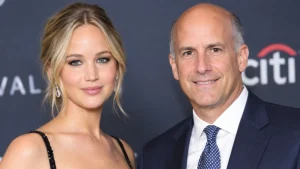
Masayoshi Son and Greg Hayes represent two distinct approaches to leadership in the modern business world. Son is widely associated with ambitious technology investments, long-term bets on artificial intelligence, and a willingness to take significant financial risks. Hayes built his reputation in industrial leadership, overseeing major aerospace and defense businesses and navigating complex corporate transformations.
Although their professional backgrounds differ, comparing Masayoshi Son and Greg Hayes offers valuable insight into how business leaders create value, manage uncertainty, and position companies for the future. One operates primarily at the intersection of investment and emerging technology, while the other has been associated with the operational discipline, engineering capabilities, and long-term customer relationships that define large industrial enterprises.
Their careers also illustrate an important principle: successful leadership does not follow a single formula. The strategies that work for a technology investor may differ substantially from those required to manage an aerospace manufacturer, a defense contractor, or a global industrial organization.
Who Are Masayoshi Son and Greg Hayes?
Understanding their careers provides the foundation for comparing their leadership philosophies and business influence.
Masayoshi Son: The Technology Investor and SoftBank Founder
Masayoshi Son is a Japanese entrepreneur and investor best known as the founder and longtime leader of SoftBank Group. Born in Japan in 1957, Son established SoftBank in 1981. The company initially focused on software distribution before expanding into telecommunications, internet businesses, and global technology investments.
Over several decades, Son developed a reputation for pursuing large opportunities in industries that he believes could reshape the global economy. His investment interests have included internet platforms, mobile communications, semiconductor technology, robotics, and artificial intelligence.
One of the most recognizable examples of his investment strategy was SoftBank’s Vision Fund, launched in 2017 with substantial capital committed to technology-oriented businesses. Its investments demonstrated Son’s willingness to pursue companies with ambitious growth plans, even when their valuations and paths to profitability involved considerable uncertainty.
Son’s approach is closely connected to his belief that technological change can create enormous economic opportunities. Rather than concentrating exclusively on established business models, he often seeks to identify platforms and technologies that could become central to future industries.
That strategy can generate significant upside when investments succeed. It can also expose investors to substantial losses when expectations exceed commercial reality.
Greg Hayes: The Industrial Executive
Greg Hayes is an American business executive best known for his leadership at United Technologies Corporation and his role in the formation of RTX Corporation.
Hayes joined United Technologies in 1989 and held a series of financial and executive positions before becoming its chief executive officer in 2014. He later became chairman and CEO as the company pursued major structural changes in its aerospace and industrial businesses.
A pivotal development came in 2018, when United Technologies announced plans to separate its Otis and Carrier businesses and combine its aerospace operations with Raytheon. The Raytheon combination was completed in 2020, creating Raytheon Technologies, which was subsequently renamed RTX in 2023.
Hayes led RTX through a period of organizational integration, operational challenges, and changing demand across commercial aviation and defense markets. His responsibilities involved managing complex supply chains, coordinating large engineering organizations, and balancing shareholder expectations with the requirements of government and commercial customers.
His career illustrates a different kind of business challenge from Son’s. Rather than primarily allocating investment capital across emerging companies, Hayes was responsible for overseeing large operating businesses where product quality, production schedules, safety, regulatory compliance, and customer commitments carry significant consequences.
Masayoshi Son and Greg Hayes: Comparing Their Leadership Styles
The most useful way to compare these executives is to examine how they approach risk, allocate resources, and measure business success.
1. Visionary Investment Versus Operational Execution
Son’s leadership style emphasizes identifying future opportunities before they become obvious to the broader market. His investments often reflect a belief that technological breakthroughs can create entirely new markets or dramatically change existing ones.
His long-term interest in semiconductor technology and artificial intelligence illustrates this approach. Through SoftBank’s investments and its ownership interest in Arm, Son has positioned the group to participate in the development of computing infrastructure that supports connected devices, data centers, and AI applications.
Hayes’s approach was more closely tied to operating performance. At United Technologies and RTX, leadership required coordinating engineering teams, managing manufacturing capacity, maintaining quality standards, and meeting the expectations of commercial aviation customers and defense agencies.
Consider two hypothetical business decisions. A technology investor might fund an early-stage AI company because its technology could become essential to a future industry. An industrial executive might invest in factory automation because it can improve production efficiency, reduce defects, or increase manufacturing capacity.
Both decisions involve strategic thinking, but they use different measures of success.
2. Risk Tolerance and Financial Discipline
Risk is another important distinction between their careers.
Son has become known for making concentrated, high-conviction investments in businesses with substantial growth potential. This strategy can produce exceptional returns when a company succeeds, but it can also magnify losses when valuations fall or business models fail to develop as expected.
SoftBank’s investment history demonstrates both possibilities. Its early investment in Alibaba became one of its most consequential successes, while its involvement with WeWork illustrated the dangers of optimistic valuations, rapid expansion, and weak underlying economics.
In October 2026, SoftBank’s continued commitment to artificial intelligence remained a major example of Son’s high-risk, long-term investment philosophy. Reuters reported that the company issued approximately $11 billion in high-yield bonds to help fund its AI-focused strategy, while highlighting concerns about borrowing, portfolio concentration, and uncertain valuations.
Reuters
Hayes operated in an environment where financial decisions also had to account for manufacturing commitments, long product-development cycles, regulatory obligations, and the consequences of operational failures.
For an aerospace and defense company, a project cannot be judged solely by its theoretical market size. Executives must consider whether the organization can deliver products safely, meet technical requirements, manage costs, and fulfill contractual obligations.
Neither approach eliminates risk. Instead, each requires a different framework for understanding and controlling it.
The Industries That Shaped Their Careers
The industries in which Son and Hayes built their careers help explain why their strategies differ.
Technology, AI, and Semiconductors
Son’s business interests have increasingly focused on the infrastructure and platforms that could support the next generation of digital technology.
Artificial intelligence requires more than sophisticated software. It also depends on semiconductor design, computing capacity, data centers, networking, energy, and access to capital. These interconnected needs create opportunities for investors willing to finance businesses across several layers of the technology ecosystem.
Arm is especially relevant because its processor designs are used across a broad range of computing devices. Its technology connects SoftBank’s investment strategy to the semiconductor industry without requiring the company to manufacture every chip itself.
Son’s broader thesis is that AI could become a foundational technology rather than a standalone product category. If that view proves correct, companies providing essential computing infrastructure may benefit from growing demand.
However, the outcome depends on practical considerations, including competition, capital expenditure, energy availability, customer demand, and whether future revenue justifies current investment levels.
Aerospace, Defense, and Industrial Technology
Hayes’s career involved industries where technological innovation must work reliably under demanding conditions.
Commercial aircraft engines, avionics, flight-control systems, missile-defense technologies, and other aerospace products require extensive engineering, testing, certification, and maintenance. These requirements make product reliability and long-term customer relationships central to business performance.
RTX’s major businesses include Collins Aerospace, Pratt & Whitney, and Raytheon. Together, they serve commercial aviation, aerospace systems, and defense markets.
The company’s environment differs from that of a typical software startup. Aerospace products can take years to develop, require substantial upfront investment, and remain in service for decades. Manufacturers must also support products after delivery.
Hayes’s leadership experience therefore offers a useful example of managing businesses in which strategic success depends on the execution of complex technical and commercial commitments.
Corporate Transformation: A Defining Part of Greg Hayes’s Career
One of the most significant chapters in Hayes’s career was the restructuring of United Technologies.
The Separation of Otis and Carrier
United Technologies operated several major businesses with different customer bases, competitive dynamics, and financial characteristics.
In 2020, Otis, the elevator and escalator business, and Carrier, the heating, ventilation, air-conditioning, and building-solutions business, became independent public companies.
The separation allowed each business to focus more directly on its own markets, operating priorities, and capital-allocation decisions.
For investors, corporate separations can make it easier to evaluate businesses individually. For management teams, they can clarify accountability and create more focused operating structures.
However, separation transactions also involve substantial work, including establishing independent corporate functions, allocating costs, and managing legal, financial, and operational transitions.
The Raytheon Combination
The other major transformation was the combination of United Technologies’ aerospace businesses with Raytheon Company in April 2020.
The transaction created Raytheon Technologies, later renamed RTX Corporation. It brought together aerospace systems and commercial aviation technologies with a large defense business.
The strategic rationale included combining complementary technical capabilities and expanding the company’s position across aerospace and defense markets.
Such a transaction also creates challenges. Different organizations may have distinct cultures, systems, supplier relationships, and management practices. Integrating them requires sustained attention to employees, customers, technology platforms, and financial targets.
Hayes’s experience demonstrates that corporate strategy is not limited to identifying an attractive transaction. Executives must also manage the difficult work of turning a proposed combination into a functioning organization.
RTX announced in 2025 that Hayes would step down as executive chairman, with Christopher Calio serving as chairman and president and CEO. This distinction matters when assessing Hayes’s career: his leadership of RTX is a significant part of his professional legacy, but he should not be described as its current CEO.
What Their Careers Reveal About Strategic Decision-Making
Although Son and Hayes operated in different sectors, their careers offer several practical lessons for business leaders.
Long-Term Thinking Requires More Than a Bold Vision
Son’s investment strategy demonstrates the potential value of identifying technological shifts early. Yet a compelling long-term vision must eventually translate into commercial value.
Investors need to examine how a business will generate revenue, whether customers will pay for its products, and how much capital it will require before becoming profitable.
Similarly, industrial leaders must balance long-term technology investments with present-day operating requirements. A promising product has limited value if it cannot be manufactured economically or delivered reliably.
The shared lesson is that strategic ambition works best when supported by a credible execution plan.
Capital Allocation Shapes Corporate Outcomes
Capital allocation is the process of deciding where an organization should invest its money, whether through acquisitions, research and development, infrastructure, or shareholder returns.
For Son, investment choices have often involved deciding which technologies and companies could benefit from major structural changes in the economy.
For Hayes, capital allocation included decisions about business portfolios, industrial operations, acquisitions, and the resources needed to support aerospace and defense programs.
In both cases, leaders must compare uncertain future benefits against immediate costs and alternative uses of capital.
A useful decision-making framework includes three questions:
- What strategic advantage will the investment create?
- What financial and operational risks could prevent the expected outcome?
- What evidence will show whether the investment is working?
These questions apply to multinational corporations, smaller companies, and individual investors evaluating business opportunities.
Adaptability Matters in Changing Markets
The technology industry evolves rapidly as computing architectures, software platforms, and customer expectations change. Leaders must be prepared to reconsider assumptions when new evidence emerges.
Industrial companies face a different but equally important need for adaptability. They must respond to changing aircraft demand, defense priorities, supply-chain disruptions, new regulations, and emerging engineering capabilities.
Son’s career reflects the pursuit of opportunities created by technological change. Hayes’s experience highlights the importance of adapting established organizations without compromising operational reliability.
Both demonstrate that leadership requires more than maintaining a consistent strategy. It also requires recognizing when the strategy needs to change.
What Investors Can Learn From Masayoshi Son and Greg Hayes
For investors researching these executives, their careers provide different ways to evaluate companies and management teams.
Son’s investment philosophy draws attention to growth potential, technological disruption, market positioning, and the relationship between innovation and valuation.
When assessing a company influenced by this approach, investors may want to consider:
- Whether its technology addresses a durable customer need.
- Whether its competitive advantage can be maintained.
- How much additional capital it may require.
- Whether its valuation reflects realistic expectations.
- How concentrated the investor’s overall portfolio would become.
Hayes’s experience offers another set of considerations, particularly for industrial and aerospace businesses.
Investors may examine production efficiency, operating margins, contract performance, product quality, research and development, and the company’s ability to manage long-term obligations.
They should also evaluate whether a merger creates measurable benefits and whether management can deliver those benefits without disrupting core operations.
Neither executive’s career provides a universal investment formula. A strategy that succeeds in one market may fail in another, and even experienced leaders can make costly mistakes.
The more useful approach is to understand the business model, assess the quality of management decisions, and compare potential returns with the risks involved.
Frequently Asked Questions
Who are Masayoshi Son and Greg Hayes?
Masayoshi Son is the founder and chairman and CEO of SoftBank Group, a Japanese technology investment and holding company. Greg Hayes is an American business executive known for leading United Technologies and serving as CEO and executive chairman of RTX Corporation.
Are Masayoshi Son and Greg Hayes business partners?
Their careers have both involved major technology and industrial businesses, but the information discussed here does not establish a specific direct business partnership between them. Their relevance to a comparison lies primarily in their different approaches to corporate leadership, investment, and strategic decision-making.
What is Masayoshi Son best known for?
Son is best known for founding SoftBank and making major investments in technology businesses. His investment history includes Alibaba, Arm, and the Vision Fund, and his recent strategy has placed significant emphasis on artificial intelligence.
What was Greg Hayes’s role at RTX?
Hayes led the company following the 2020 combination of United Technologies’ aerospace businesses and Raytheon. He served as CEO and chairman before transitioning to executive chairman. In 2025, he stepped down from that role as RTX moved to new leadership.
How do Masayoshi Son and Greg Hayes differ as leaders?
Son is primarily associated with technology investing, long-term growth opportunities, and high-conviction capital allocation. Hayes is associated with industrial operations, corporate restructuring, aerospace engineering businesses, and the management of complex organizations.
What companies are associated with Masayoshi Son?
His career is closely associated with SoftBank Group, SoftBank’s Vision Fund, and Arm. SoftBank’s investment history also includes Alibaba and numerous other technology companies.
What companies are associated with Greg Hayes?
Hayes is primarily associated with United Technologies Corporation and RTX Corporation. His career also relates to the separation of Otis and Carrier and the combination of United Technologies’ aerospace businesses with Raytheon.
Why is the comparison between Son and Hayes relevant?
The comparison illustrates two different ways Masayoshi Son and Greg Hayes to create business value. One emphasizes investment in technologies that may reshape future markets, while the other emphasizes managing established industrial capabilities, executing corporate transformations, and delivering reliable products.
What can entrepreneurs learn from their careers?
Entrepreneurs can learn to match their leadership approach to their business model. Emerging technology companies may need bold investment and rapid experimentation, while businesses with complex physical products may require disciplined operations, quality controls, and careful capital planning.
Does either leadership style guarantee business success?
No. Visionary investing can expose businesses to valuation risk and financial losses, while operational discipline cannot eliminate market uncertainty or execution challenges. Long-term success depends on strategy, timing, sound financial decisions, capable teams, and the ability to adapt.
Conclusion
Masayoshi Son and Greg Hayes illustrate two distinct but valuable approaches to modern business leadership. Son’s career at SoftBank highlights the opportunities and risks involved in investing in transformative technologies. Hayes’s experience at United Technologies and RTX demonstrates the complexity of leading large industrial businesses and executing major corporate transformations.
Their careers also show why leadership cannot be judged by ambition alone. Strong strategies must be supported by sound capital allocation, realistic expectations, effective execution, and an understanding of risk.
For business leaders and investors, the most important takeaway is not to choose between visionary thinking and operational discipline. It is to recognize when each approach is needed and how the two can complement one another in building sustainable, long-term value.